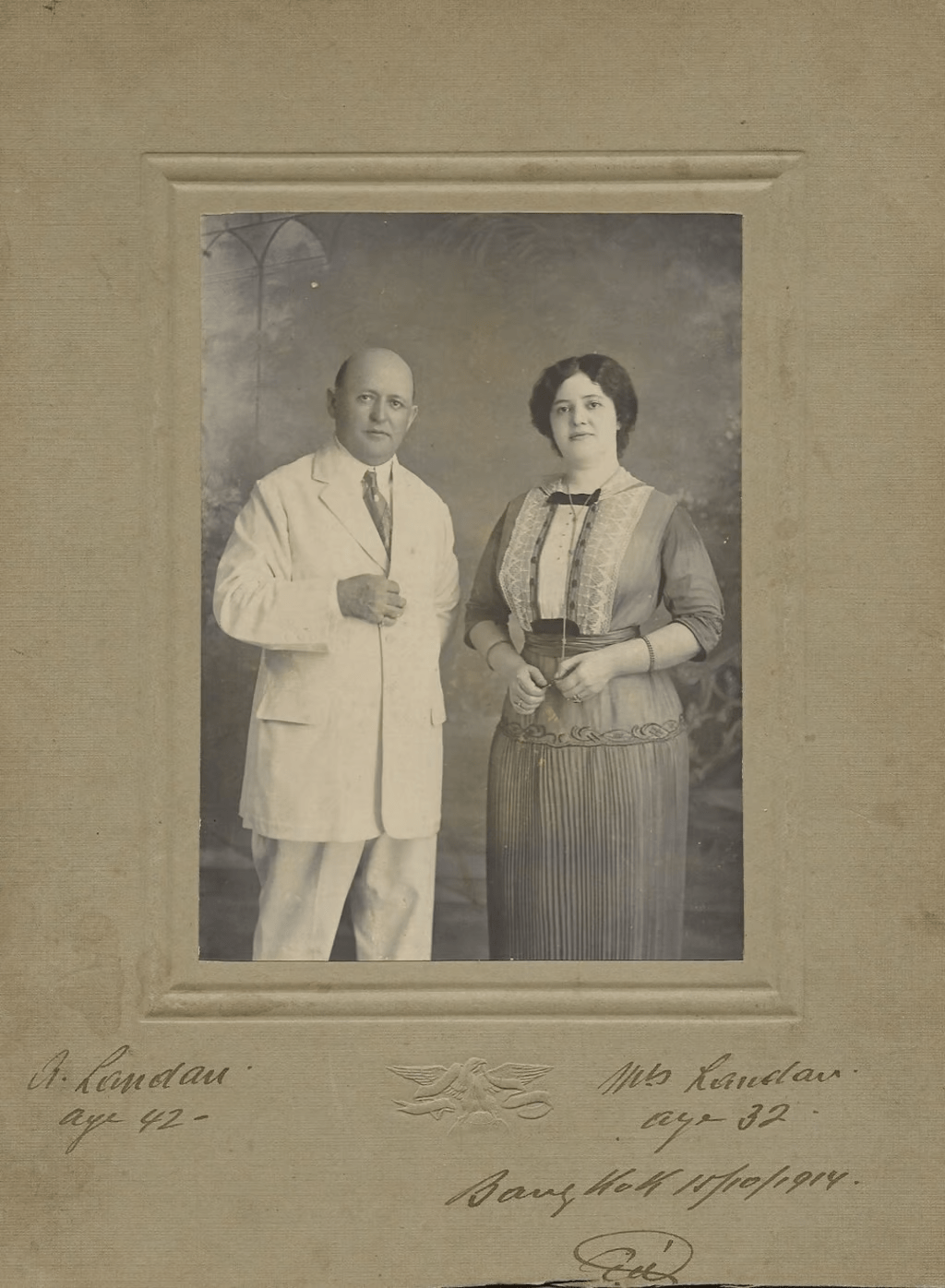
The story of Jimmy’s Kitchen is ultimately a story of the city of Hong Kong. It is a romantic tale of Shanghai and Hong Kong, of two worlds united by culture and divided by borders and frontiers. A tale cemented by history along with myriad influences, with Western contact from a man of the Midwest who went by the name of Jimmy James who was touched by the spirit of wanderlust, curiosity and ambition, propelled along by his lifelong business partner Aaron Landau, an immigrant who had moved from Eastern Europe, to Palestine, then to Singapore and finally Shanghai, who had experience in various businesses. They chanced upon one another in the vibrant culinary scene of Shanghai, and in recognising each other’s talent, formed a lifelong collaboration that would ultimately lead to the establishment of Jimmy’s Kitchen in Hong Kong.
The story of Jimmy James echoes the tale of Jay Gatsby, who is also a man of the Midwest. Both self-made men in pursuit of the American Dream, in attaining the green light. These are twin stories that are filled with hope, promise and a higher calling in creating something greater than themselves, who have immortalised themselves in time as emblematic icons of the Roaring Twenties. Be it at the heart of the industrial monster of New York City, or deep in the bosom of the Dragon in the rising city of Shanghai, where the beginnings of a new golden era of opportunity in the Orient are stirring and finally awakening.
Jimmy James was posted to Southeast Asia from the US army, and after discharge he was enlisted to hold the position of Deputy Marshall in 1923 where he opened a hamburger stand on Chefoo docks, now Yantai on the north coast of Shantung, an anchorage for the American navy, and had opened a popcorn stand later on. In 1924, his next move was the opening of his first restaurant named, ‘The Broadway Lunch’ in Shanghai’s docklands opposite the historic Savoy Hotel. It soon became known to regular patrons as “Jimmy’s”, so he changed its name officially to “Jimmy’s Kitchen”, this is how the iconic name of Jimmy’s Kitchen came to be. In 1928, Aaron Landau agreed to open Hong Kong’s first Jimmy’s Kitchen, near the Seamen’s Institute and the Old China Fleet Club, a favoured haunt of the British and American naval officers. This legacy led to the birth of its Kowloon establishments, which began in 1969.
The story of Jimmy’s Kitchen was certainly a tale of two cities in the 1920s. It was a period of great change, upheaval and rupture that saw the economic transformation of Hong Kong from a fishing village into a global urban and financial trade centre. The city of Hong Kong, soon to become the “Pearl of the Orient”, seemed to have caught and ridden the waves of change that swept from the West. While America was the land of opportunity to many in the realisation of the American Dream, Hong Kong was that very promised land for Jimmy James. As the unrelenting torrents of capital and entrepreneurial talent flowed through the borders from Shanghai, the shining city on the hill, into the underdeveloped backwater that was Hong Kong, it breathed life into the city, birthing it into modernity and existence. Eventually, it would take on its apodictic title of “Pearl of the Orient.”
The diverse flavours of Jimmy’s Kitchen are indicative of the socioeconomic exchanges during the colonial period. This is evident through the iconic dishes, particularly the Chicken Madras curry, which came to be a symbol of Jimmy’s renown later on. The iconic curry became an instant classic following its first appearance as a staff meal cooked by Jimmy’s Hong Kong Indian chefs. At the request of Amelia Landau, the owner’s wife, the famed dish was then incorporated as part of Jimmy’s original menu, which at the time catered to many British and American navy officers who were regular patrons in its heyday. Jimmy’s Kitchen is an integral part of Hong Kong’s story, of not just old Hong Kong—but of British Hong Kong, of a bygone era that came to define the city. It is a testament that still lives on today, as it represents the myriad influences of East and West in its cuisine, and how it is an intimate story between a restaurant and a city’s shared histories. The dish of the Chicken Kiev also speaks to this notion of Hong Kong not simply as a metropolis, but as a melting pot of cultural exchange. In 1920s Shanghai, it was through this recipe that Jimmy’s chefs mastered cuisine influenced by Russian emigrés, cementing its place in the renowned menu with its character—the centre oozing with garlic herb butter—a dish that celebrates the richness of its cultural heritage and legacy, which speaks to the many influences that is definitive of Jimmy’s Kitchen.
The story of Jimmy’s Kitchen is also a tale of overcoming hardship and courage in the face of adversity, which parallels the struggles of Hong Kong as they share the same twin fates in their histories and relationship with one another. Jimmy’s Kitchen moved once again from near the Seamen’s Institute and the Old China Fleet Club on Lockhart Road in Wan Chai, to China Building in Theatre Lane in Central. In 1934, Leo Landau, son of Aaron Landau joined the business, only for it to face forced closure in 1941 due to the five years occupation of Hong Kong during WWII. During the war, Leo was interned in Sham Shui Po and in 1945 at the end of the war, he managed to restart the business with many of his original staff, and as for Jimmy James and his family, they were interred in a centre outside Shanghai where he was put in charge of running the camp kitchen. When the war ended in 1945, he returned to running his business until he sold it in 1948. The second closure of Hong Kong’s Jimmy’s Kitchen was due to the COVID-19 pandemic in 2019, yet another tumultuous event that led to the forced closures of countless businesses in the city of Hong Kong. Jimmy’s Kitchen is not simply any old long standing Western establishment, but rather it is as symbolic as the British Crown which endures and stands the test of time embodying a history and quintessence of the city’s bustling and brutally modern landscape, be it the Jimmy’s of Theatre Lane or Wyndham Street.
The recent revival of the Beef Wellington in its current locale at 12 Pedder Street, Central marks the reopening of Jimmy’s in a post-pandemic Hong Kong, a rebirth that ushers a legacy towards its centennial mark that has now surpassed half of the British Hong Kong period. By reintroducing this traditional fare, it brings with it the memory of Hong Kong’s bygone eras, where prestige was not a masquerade, but lived moments. That is the living memory of Jimmy’s Kitchen—it denotes the history of British Hong Kong. It is a space that represents the old and the new, in breathing new life into the legacy of postcolonial Hong Kong, enriching its modern culinary landscape. It is for both the common folk, and of the business class, as it is often the hub that caters to the business meetings between Western businessmen and their Asian counterparts during Hong Kong’s golden era, up to this very day. Thus, Jimmy’s Kitchen is many things, it possesses a multifarious and hybrid identity, that allows for the flourishing of many identities and cultural exchange, as well as economic.
Jimmy’s Kitchen is certainly an enduring symbol of nostalgia, as it still hails a clientele base from the past decades, as a space of exchange for not just businessmen, but also for politicians, Hollywood A-list actors, et al. The 60s and 70s where limited competition meant Jimmy’s was very much the go-to place, where the likes of Frank Sinatra, Charlie Chaplin and Orson Welles all dined at Jimmy’s Kitchen, and also actor William Holden would be a regular patron of the establishment. It was and continues to be a celebrated institution that represents both the days of British Hong Kong and also of class, as its modern patrons which includes the likes of Anson Chan, the former Chief Secretary for Administration of Hong Kong and also the Harilela family, to name a few.
The Harilelas, of Sindhi Indian descent, embodies the idea of planted seedlings flourishing in the haven that was Hong Kong. Hari Harilela, born in British India in the 1920s, had a father named Naroomal Lilaram Mirchandani, later renamed Naraindas Harilela, who was the first of the family to venture into Hong Kong and Canton in search of fortune. Similarly to the stories of Jimmy James and Jay Gatsby’s American Dream in reaching for the “green light”, Naraindas Harilela succeeded in realising the dream of the golden era’s fortune and prosperity. He rode on the waves of change, bringing his family a legacy of great influence during British Hong Kong, laying the foundations for their success in various sectors, including hospitality and real estate.
The Harilela family aided in the survival of Jimmy’s Kitchen Kowloon when the lease expired in 1982 at J. Hotung House located on Hankow Road, Tsim Sha Tsui—the same building now named Hankow Centre, bought by the Landaus family in 1949, an acquisition that cemented a decades-long history on Ashley Road in 1982 until its closure in 2017. With Jimmy’s 21st century revival on Pedder Street, the story of Jimmy’s Kitchen not only speaks of survival but of the enduring entrepreneurial spirit of Hong Kong and its original founders that made it the city for what it was, and what it continues to be—a city of global economic significance, and a promise of opportunity that is a deeply intimate part of the city that is seen and celebrated in the institution that is Jimmy’s Kitchen.
 Jeremy Got narratives